
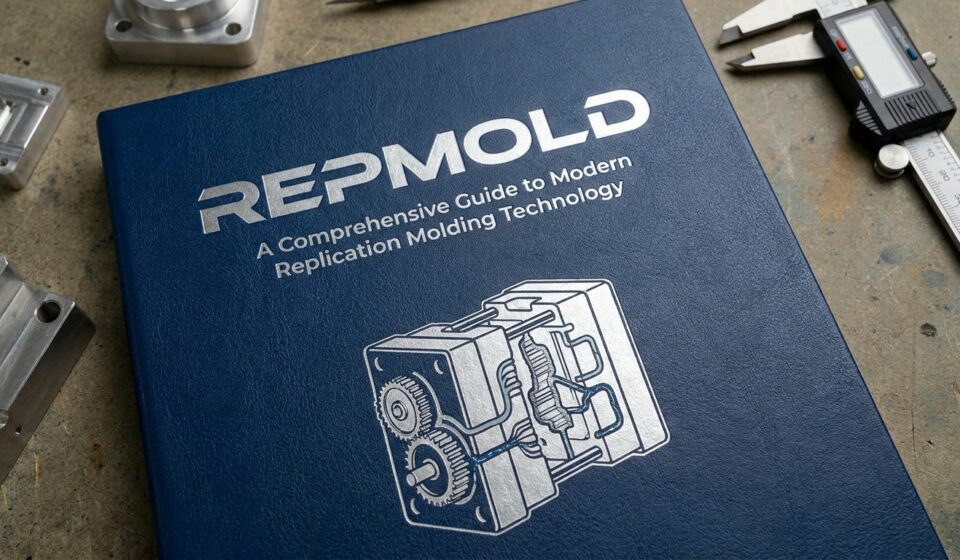

Repmold is an emerging concept in advanced manufacturing and prototyping that focuses on replication molding systems designed for precision, scalability, and cost efficiency. In simple terms, repmold refers to a modular molding approach that enables the duplication of components, parts, or product designs using reusable or semi-reusable mold structures.
In today’s manufacturing landscape, companies are constantly seeking faster, more flexible, and more economical production methods. Traditional molding techniques often require high setup costs, long lead times, and limited adaptability. Repmold addresses these challenges by introducing a system that allows manufacturers to replicate designs with improved efficiency while maintaining consistent quality.
This approach is especially relevant in industries such as automotive manufacturing, consumer electronics, medical devices, and industrial prototyping, where precision and repeatability are critical.
What is Repmold?
Repmold can be defined as a modular replication molding system that enables the production of identical or near-identical components through a structured mold-based replication process. Unlike conventional single-use molds or rigid production systems, repmold is designed for adaptability and reuse.
The core idea behind repmold is to simplify the process of turning a digital or prototype design into physical products at scale. It combines principles from injection molding, additive manufacturing, and modular tooling systems to create a hybrid production method.
In practice, repmold allows manufacturers to:
- Create reusable mold modules
- Rapidly adjust designs without rebuilding entire molds
- Reduce production downtime
- Scale manufacturing efficiently
Because of its flexibility, repmold is increasingly seen as a bridge between prototyping and full-scale industrial production.
Core Principles of Repmold Technology
The effectiveness of repmold lies in several foundational principles that guide its design and application.
1. Modularity
Repmold systems are built using interchangeable components. Instead of relying on a single rigid mold, the system allows parts of the mold to be replaced or modified independently.
2. Replication Efficiency
The system is optimized for producing multiple identical units with minimal variation. This ensures high consistency across production batches.
3. Material Flexibility
Repmold supports a wide range of materials, including polymers, resins, lightweight metals, and composite materials.
4. Rapid Adaptation
One of the most important principles is adaptability. Changes in product design can be implemented quickly without redesigning the entire mold system.
5. Cost Optimization
By reducing the need for new molds for every design iteration, repmold significantly lowers production costs over time.
How Repmold Works
The repmold process typically involves several structured stages that convert a design into a finished product.
Step 1: Digital Design Creation
The process begins with a CAD (Computer-Aided Design) model. Engineers or designers create a precise digital version of the product.
Step 2: Mold Configuration
The repmold system translates the digital design into modular mold components. These components are configured based on the geometry of the product.
Step 3: Material Preparation
Raw materials such as thermoplastics, resins, or composite mixtures are prepared for molding.
Step 4: Replication Process
The mold is assembled, and the material is injected or poured into the mold cavities. This step produces the physical replica of the design.
Step 5: Cooling and Solidification
Depending on the material used, the molded part is cooled or cured until it solidifies.
Step 6: Finishing and Quality Control
The final product is removed, trimmed if necessary, and inspected for quality assurance to ensure it meets specifications.
Key Features of Repmold Systems
Rep mold technology is distinguished by several advanced features that make it valuable in modern production environments.
High Precision Output
Rep mold systems are engineered to produce highly accurate components with minimal deviation between units.
Scalable Production
Whether producing small batches or large-scale manufacturing runs, rep mold systems can scale efficiently without major redesigns.
Reduced Downtime
Because mold components are modular, repairs or adjustments can be made quickly, minimizing production interruptions.
Design Flexibility
Manufacturers can modify product designs without discarding the entire mold setup, making it ideal for iterative development.
Sustainability Advantages
By reducing waste from discarded molds and optimizing material usage, rep mold contributes to more sustainable manufacturing practices.
Applications of Repmold
Rep mold technology is versatile and can be applied across various industries.
Automotive Industry
In automotive manufacturing, repmold is used for producing interior components, trim parts, and prototype testing models. Its ability to quickly adapt to design changes makes it valuable during vehicle development cycles.
Consumer Electronics
Electronic device manufacturers use rep mold to create casings, structural components, and prototypes for smartphones, laptops, and wearable devices.
Medical Device Manufacturing
Precision and consistency are critical in medical applications. Rep mold supports the production of surgical tools, diagnostic equipment parts, and prosthetic components.
Industrial Equipment
Heavy machinery and industrial systems benefit from rep mold by enabling the production of durable, customized components.
Product Prototyping
Startups and design teams rely on repmold to rapidly test and refine new product ideas before mass production.
Benefits of Repmold Technology
The adoption of rep mold brings several significant advantages to manufacturers and designers.
Faster Product Development
Rep mold shortens the time required to move from concept to production by streamlining the molding process.
Lower Production Costs
The reuse of modular molds reduces the need for expensive custom tooling.
Improved Product Consistency
Each replicated unit maintains a high level of uniformity, ensuring quality standards are met.
Enhanced Innovation
Designers can experiment with modifications more freely, knowing that mold adjustments are less costly and time-consuming.
Better Resource Utilization
Rep mold systems optimize material usage, reducing waste and improving sustainability.
Challenges in Repmold Implementation
Despite its advantages, rep mold also presents certain challenges that manufacturers must consider.
Initial Setup Complexity
Designing a modular mold system requires technical expertise and careful planning.
Equipment Investment
Although long-term costs are reduced, initial investment in rep mold infrastructure can be significant.
Material Limitations
Not all materials are compatible with modular replication systems, limiting application in some industries.
Training Requirements
Operators and engineers must be trained to work with repmold systems effectively.
Repmold vs Traditional Molding
Understanding how repmold compares to traditional molding helps highlight its advantages.
Flexibility
Traditional molding is rigid and costly to modify, while rep mold allows quick adjustments.
Cost Efficiency
Repmold reduces long-term tooling costs, especially for iterative production.
Speed
Repmold accelerates the transition from design to production.
Scalability
Both systems can scale, but rep mold does so with fewer structural changes.
Sustainability
Rep mold generally produces less waste compared to conventional mold manufacturing.
Future of Repmold Technology
The future of rep mold is closely linked to advancements in automation, artificial intelligence, and digital manufacturing.
Integration with AI
AI-driven design optimization will allow rep mold systems to automatically configure molds for maximum efficiency.
Smart Manufacturing Systems
Repmold is expected to become part of larger smart factory ecosystems powered by IoT and real-time analytics.
Advanced Materials
New composite and bio-based materials will expand the capabilities of repmold systems.
Fully Automated Production
Future rep mold facilities may operate with minimal human intervention, relying on robotics and automated quality control systems.
Real-World Impact of Repmold
Repmold is not just a theoretical concept—it has practical implications for how products are designed and manufactured globally. Companies adopting rep mold methodologies experience improved agility in product development cycles and better responsiveness to market demands.
In competitive industries where speed and precision determine success, repmold provides a strategic advantage by enabling rapid iteration and scalable production without sacrificing quality.
Conclusion
Repmold represents a significant evolution in modern manufacturing technology. By combining modular design principles with replication molding techniques, it offers a flexible, cost-effective, and scalable solution for producing high-quality components.
As industries continue to evolve toward faster development cycles and more customized products, repmold is positioned to play an increasingly important role in bridging the gap between prototyping and full-scale production. Its adaptability, efficiency, and long-term cost benefits make it a valuable tool for manufacturers aiming to stay competitive in a rapidly changing industrial landscape.