
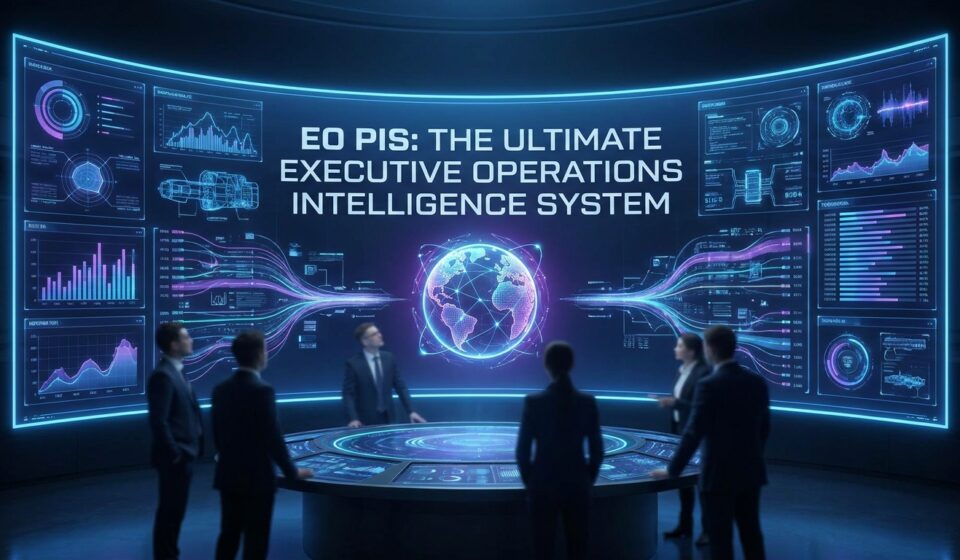
EO PIS: The Ultimate Executive Operations Intelligence System EO PIS

The Executive Operations Intelligence System (EO PIS) represents a modern evolution in how organizations handle decision-making, operational visibility, and executive-level strategic planning. In an era defined by rapid digital transformation, data overload, and increasingly complex business ecosystems, executives require more than traditional dashboards or static reports. They need a unified intelligence layer that connects operations, analytics, forecasting, and real-time decision support into a single coherent system.
EO PIS is designed to fulfill this need. It acts as a centralized intelligence framework that aggregates data from across an organization, processes it through advanced analytics and AI models, and delivers actionable insights tailored specifically for executive leadership. Unlike conventional business intelligence tools that focus primarily on historical reporting, EOPIS emphasizes predictive and prescriptive intelligence.
At its core, EOPIS bridges the gap between raw operational data and strategic executive action. It transforms fragmented information into structured intelligence that can guide decisions across finance, operations, human resources, supply chain, marketing, and risk management.
What is EO PIS?
The Executive Operations Intelligence System (EO PIS) can be defined as an integrated platform that combines enterprise operations data, artificial intelligence, machine learning, and visualization tools to support executive-level decision-making.
It is not just a software tool—it is an ecosystem. EOPIS connects multiple layers of business intelligence:
- Data collection from enterprise systems (ERP, CRM, HRM, IoT, etc.)
- Real-time data processing and normalization
- Predictive analytics and forecasting models
- Executive dashboards and scenario planning tools
- Automated alerts and decision recommendations
The goal of EO PIS is to ensure that executives are not reacting to outdated reports but are instead making decisions based on live, continuously updated intelligence.
This system is especially valuable in large enterprises where data is distributed across departments and geographic regions, making traditional reporting methods inefficient or insufficient.
Core Components of EO PIS
A fully functional EO PIS is composed of several interconnected components that work together to deliver actionable intelligence.
1. Data Integration Layer
This layer collects structured and unstructured data from multiple sources, including internal databases, third-party platforms, cloud services, and IoT devices. It ensures that all relevant business data flows into a unified system.
2. Data Processing and Normalization Engine
Once data is collected, it must be cleaned, standardized, and transformed. EOPIS uses advanced ETL (Extract, Transform, Load) pipelines to ensure consistency and accuracy across datasets.
3. AI and Analytics Core
This is the intelligence engine of EO PIS. It uses machine learning models, statistical analysis, and predictive algorithms to identify trends, anomalies, and opportunities. It can also simulate future scenarios based on historical and real-time data.
4. Executive Dashboard Interface
The dashboard is designed specifically for executives. It presents high-level insights through intuitive visualizations such as KPI scorecards, trend graphs, heat maps, and risk indicators. The focus is clarity rather than complexity.
5. Decision Support System
EOPIS goes beyond visualization by offering actionable recommendations. It may suggest cost optimization strategies, supply chain adjustments, or risk mitigation actions based on data analysis.
6. Alert and Notification System
Real-time alerts notify executives about critical changes, such as sudden revenue drops, operational bottlenecks, or emerging market risks.
Key Features of EO PIS
EO PIS stands out due to its combination of advanced features designed for executive efficiency.
Real-Time Intelligence
Unlike traditional reporting systems that operate on delayed data, EO PIS provides continuous updates, ensuring that executives always work with the latest information.
Predictive Analytics
The system forecasts future outcomes based on current trends. For example, it can predict sales performance, supply chain disruptions, or workforce requirements.
Scenario Simulation
Executives can test “what-if” scenarios to understand the impact of strategic decisions before implementing them.
Cross-Departmental Visibility
EOPIS breaks down data silos by integrating information from all departments into one unified view.
AI-Powered Recommendations
The system not only presents data but also suggests optimal actions based on algorithmic analysis.
Customizable Dashboards
Executives can personalize dashboards according to their priorities, whether financial performance, operational efficiency, or market expansion.
Benefits of Implementing EO PIS
Organizations that adopt EOPIS experience significant improvements in efficiency, agility, and strategic clarity.
Improved Decision-Making
Executives can make faster and more accurate decisions based on real-time intelligence rather than fragmented reports.
Enhanced Operational Efficiency
By identifying inefficiencies in workflows and processes, EO PIS helps organizations optimize resource allocation.
Risk Reduction
Early detection of risks allows organizations to mitigate issues before they escalate into major problems.
Increased Competitive Advantage
Organizations using EO PIS can respond to market changes faster than competitors, gaining a strategic edge.
Better Financial Performance
Through data-driven insights, companies can reduce costs, improve revenue streams, and optimize investments.
EO PIS Architecture
The architecture of EOPIS is typically built on cloud-native, scalable infrastructure designed for high performance and reliability.
Cloud Infrastructure
Most EOPIS platforms operate on cloud environments such as AWS, Azure, or Google Cloud, ensuring scalability and global accessibility.
Microservices Framework
The system is divided into modular services that handle specific functions like analytics, data ingestion, or reporting.
API Integration
EOPIS connects seamlessly with enterprise systems through APIs, enabling smooth data exchange.
Security Layer
Given the sensitivity of executive data, EOPIS includes strong encryption, authentication protocols, and compliance frameworks.
Use Cases of EO PIS
EO PIS can be applied across multiple industries and organizational functions.
Corporate Strategy and Planning
Executives use EO PIS to evaluate market conditions and develop long-term strategies.
Supply Chain Management
The system helps track supply chain performance, identify delays, and optimize logistics.
Financial Management
EO PIS provides real-time financial dashboards, forecasting, and budget tracking.
Human Resources Optimization
It can analyze workforce performance, employee turnover, and recruitment needs.
Marketing Intelligence
EOPIS evaluates campaign effectiveness and customer behavior trends.
Challenges in Implementing EO PIS
While EOPIS offers significant benefits, its implementation is not without challenges.
Data Integration Complexity
Combining data from multiple legacy systems can be technically difficult.
High Implementation Costs
Developing and deploying an EO PIS requires significant investment in technology and expertise.
Change Management
Employees and executives may need time to adapt to a data-driven decision-making culture.
Data Privacy Concerns
Handling sensitive business data requires strict compliance with privacy regulations.
Future of EO PIS
The future of EO PIS is closely tied to advancements in artificial intelligence, automation, and real-time data processing.
AI Evolution
Future EO-PIS platforms will feature more advanced AI capable of autonomous decision-making in certain scenarios.
Hyper-Automation
EO PIS will increasingly integrate with automated systems that can execute decisions without human intervention.
Augmented Executive Intelligence
Executives may rely on EOPIS as a digital co-pilot that continuously advises them in real time.
Deeper Predictive Capabilities
Future systems will not only predict outcomes but also recommend multi-step strategic plans.
Conclusion
The Executive Operations Intelligence System (EOPIS) represents a significant shift in how modern organizations operate and make decisions. By integrating data, analytics, and artificial intelligence into a unified executive framework, EOPIS empowers leaders to move beyond reactive management toward proactive, intelligent strategy execution.
As businesses continue to face increasing complexity and competition, systems like EO PIS will become essential tools for maintaining agility, efficiency, and long-term success.